Buying a used bicycle, e-bike, helmet, or child safety seat is an excellent way to save money and promote environmental sustainability. Many cyclists choose pre-owned gear to access high-quality equipment at a fraction of its original retail price. However, purchasing second-hand cycling equipment introduces safety considerations that do not apply to buying brand-new items. Unlike retail purchases where manufacturers can contact buyers directly using registration data, second-hand transactions break the safety communication chain.
One of the most important but frequently overlooked safety steps is checking for active product safety recalls. Cycling components, e-bike batteries, helmets, and vehicle-mounted racks are precision engineering items that operate under substantial physical stress. If any of these items have a manufacturing defect, they can fail during a ride, potentially causing accidents or injuries. Checking for active product safety notices is a vital habit for ensuring that your pre-owned purchases are safe to ride, repair, or gift to others.
The Safety Risks of Pre-Owned Cycling Gear
When a manufacturer identifies a design flaw or safety hazard in a bicycle or accessory, they issue a safety recall, usually in coordination with government regulators. For new items, retailers and manufacturers maintain purchase records to alert buyers. In the used market, however, these safety warnings rarely reach subsequent owners. Pre-owned bicycles, helmets, and electrical components often remain in circulation long after a manufacturer has advised consumers to stop using them.
The risks vary across different categories of cycling gear. Mechanical components like carbon forks, brake calipers, and wheel rims can suffer from manufacturing defects that make them prone to sudden cracking or failure. In recent years, the rapid growth of electric bicycles has introduced lithium-ion battery packs to the cycling community. These batteries store significant energy. If they suffer from manufacturing defects, poor circuit design, or charger mismatches, they can overheat, leak, swell, or experience thermal runaway, presenting serious fire hazards.
Other critical accessories also carry hidden dangers. A child safety seat with a defective buckle or a hitch-mounted bike rack with a weak latch can fail on the highway, endangering both the cyclist’s family and other motorists. Performing this research before you buy is just as critical as the due diligence required when you prepare to review a local bike shop before making an offer. Taking a few minutes to check a product’s history ensures that a bargain used purchase does not turn into a safety hazard.
What Information to Collect Before Searching
To conduct an effective recall check, you must collect specific product details. A simple web search using a generic term like “used mountain bike recall” will return thousands of unrelated results. Manufacturers recall specific model years, serial number ranges, date codes, or manufacturing batches, rather than entire product lines.
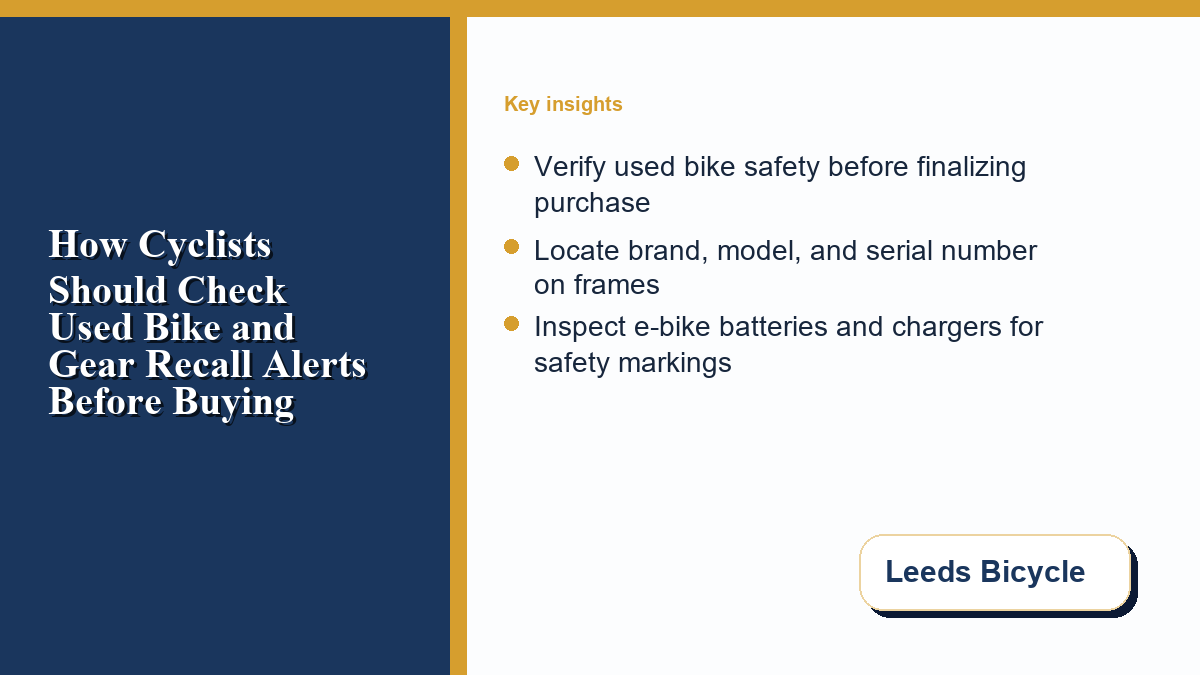
Before you inspect or purchase used gear, request the following details from the seller, or locate them directly on the physical item’s manufacturing label. This label is typically a sticker, metal plate, or stamped engraving on the frame or chassis. Collect the following information:
- Brand and Model Name: The commercial name of the bicycle or accessory (e.g., the specific frame or component model).
- Model Number and SKU: The manufacturer’s alphanumeric code identifying the exact version.
- Serial Number: The unique identifier stamped on the underside of the bottom bracket, near the rear dropouts, or on the component body.
- Date Code or Batch Number: A code representing the month and year of manufacture, often found on helmets, batteries, or child seats.
- Safety Certification Marks: Labels such as CPSC, ASTM, CE, UL, or similar marks that help you identify which safety standard or testing path the product claims to meet.
When browsing online marketplaces like eBay, Facebook Marketplace, or Craigslist, ask the seller for clear, high-resolution photos of the physical serial numbers and certification labels. If a seller is unwilling or unable to provide these details, it is best to walk away from the transaction. A missing label makes it impossible to verify the product’s safety history.

Where Bike and Gear Recalls Can Appear
Product safety notices are published across several platforms, depending on the type of product and the regulatory agency involved. Understanding where these notices are cataloged helps you search efficiently.
Federal consumer safety databases are the most comprehensive starting points. In the United States, the Consumer Product Safety Commission recall database covers non-automotive consumer products, including bicycles, helmets, protective pads, and child bike seats. Its notices can include hazards such as fire, fall, choking, or crash risks when those details are part of the official recall notice. For global safety contexts, other national agencies, such as Health Canada or the European Safety Gate, similarly list exported cycling gear.
Automotive accessories require a different search path. Vehicle-mounted equipment, such as hitch-mounted bike racks, roof racks, and trunk-mounted carriers, can fall under vehicle-equipment recall searches. For those products, use the National Highway Traffic Safety Administration recall database with the brand and model number of the rack, then confirm any remedy on the official notice or manufacturer page.
At Leeds Bicycle, the editorial goal is to promote safe cycling habits and help riders make informed gear choices, whether buying new or used. We recommend checking manufacturer safety pages directly as well. Many bicycle brands maintain dedicated safety or recall pages that provide details about affected products and remedy procedures.
How to Verify Alerts Using Official Databases
Once you have gathered the product details, verify the recall status using a structured lookup strategy. Start with official databases to get the most authoritative safety and recall information.
Begin by visiting Recalls.gov, a federal portal that points consumers to recall information from multiple government agencies, including the CPSC and NHTSA. If you are checking a bicycle frame, helmet, or child seat, search the CPSC recall lookup tool using the brand and model number. For vehicle racks or trailer accessories, check the NHTSA database. If the search returns a match, compare the manufacturer’s specified recall dates and serial number ranges with the physical labels on your item.
If a matching recall notice is found, identify the manufacturer’s designated remedy. Depending on the defect, this may involve a replacement part (such as a redesigned fork or quick-release skewer), a repair kit, a full replacement of the product, or a store refund. Official agency and manufacturer recall pages are the only places to confirm these specific remedy instructions and verify whether the remedy can still be claimed.
To assist with search and monitoring, you can use a Recall Tracker recall search to quickly browse and check for recent consumer product alerts. This tool helps you discover and cross-reference safety notices across multiple categories. However, third-party databases are intended for research and monitoring purposes only. The official manufacturer or regulating agency notice controls the final safety remedies and remedy instructions. Always rely on official sources to confirm whether a specific remedy is active and how to receive it safely.
A Used-Bike and Gear Buying Checklist
Before you finalize the purchase of any pre-owned cycling equipment, use this systematic checklist to ensure the item is safe to ride or install:
| Verification Step | Detail to Check | Reference Source |
|---|---|---|
| Physical Label | Locate the brand name, model number, serial number, and date code. | Underside of bottom bracket, seat tube, or battery casing. |
| Helmet Inspection | Check the inside sticker for CPSC compliance and the manufacture date. | Internal helmet shell liner (EPS foam). |
| Battery Safety Check | Scan the e-bike battery for swelling, cracking, or unauthorized charger cables. | Battery pack surface and manufacturer labels. |
| Government Databases | Query model and serial numbers on official recall engines. | Recalls.gov, CPSC.gov, or NHTSA.gov (for racks). |
| Manufacturer Remedy | Verify if a recalled item has received the official factory fix. | Manufacturer customer support or authorized dealer. |
For more maintenance guidelines, safety checklists, and buying guides, feel free to explore the Leeds Bicycle blog. Taking a few minutes to check these safety vectors protects your household and ensures that your second-hand gear remains reliable on the road.

What to Avoid: Common Used-Gear Pitfalls
When shopping for used cycling equipment, keep these critical safety boundaries in mind to avoid common used-market pitfalls:
- Do Not Rely Only on Seller Assurances: Do not assume a seller has checked for recalls or is aware of safety issues. Many marketplace sellers are casual riders who may not follow safety bulletins.
- Do Not Purchase Damaged Helmets: A bicycle helmet is designed to absorb impact. Even if a helmet has no active recalls, pause before buying it used if it shows scratches, dents, compressed foam, missing labels, or any sign that it may have been involved in a crash.
- Do Not Ignore E-Bike Battery Warning Signs: If an e-bike battery shows signs of swelling, case cracking, corrosion, or leaks, or if it emits a chemical odor or feels hot to the touch, do not use or charge it. Use the charger and charging instructions specified by the manufacturer.
- Do Not Attempt DIY Recall Repairs: If an item is recalled, do not attempt to patch or repair the defect yourself unless the official remedy specifically instructs consumers to do so. Always follow the manufacturer’s official instructions for the repair, replacement, refund, or stop-use notice.
Frequently Asked Questions
Should I trust a seller’s claim that used bike gear has no recalls?
No. Treat reseller claims as unverified. Always request the model and serial numbers so you can verify the bike, helmet, battery, rack, or accessory on official databases.
Where is the serial number located on a bicycle frame?
On most bicycles, the serial number is engraved or stamped into the metal shell under the bottom bracket (where the pedals meet the frame). On some carbon fiber or full-suspension models, it may be on the seat tube or chainstays.
How can I tell if a bicycle helmet is certified and safe?
Look for a sticker inside the helmet indicating the applicable safety standard, such as CPSC compliance in the US or CE EN1078 in Europe. Also check the manufacture date, shell condition, foam liner, and any official recall or manufacturer guidance before relying on a used helmet.
Are vehicle-mounted bike racks checked under CPSC or NHTSA?
Vehicle-mounted bike racks can require a vehicle-equipment search path. Check the NHTSA recall database for the brand and model, then confirm any affected models and remedies on the official notice or manufacturer page.
Does a third-party lookup tool replace official manufacturer safety instructions?
No. Online lookup portals are convenient for discovery and research, but the official manufacturer recall bulletin or regulating agency notice controls the final safety remedies and instruction procedures.