Buying a local retail business requires a deep understanding of community dynamics and operational realities. For prospective buyers analyzing the Fort Wayne business acquisition market, evaluating local commercial demand is a critical first step before writing a formal letter of intent. While the prospect of owning a specialty retail outlet is exciting, a buyer should separate enthusiasm from objective market signals. Conducting a thorough analysis of local factors keeps the investment grounded in financial sustainability rather than passion alone.
For many, the dream of owning a local bicycle shop is fueled by a love for cycling and a desire to serve the community. However, a successful acquisition requires viewing the shop not just as a hub for enthusiasts, but as a retail and service business that needs consistent cash flow. Before making an offer, prospective buyers can review bicycle-industry resources such as the Leeds Bicycle blog to understand typical operational challenges, industry trends, and local riding patterns. This preliminary education helps buyers ask better questions during due diligence and avoid common specialty retail blind spots.
Evaluating Seasonality and Revenue Diversification
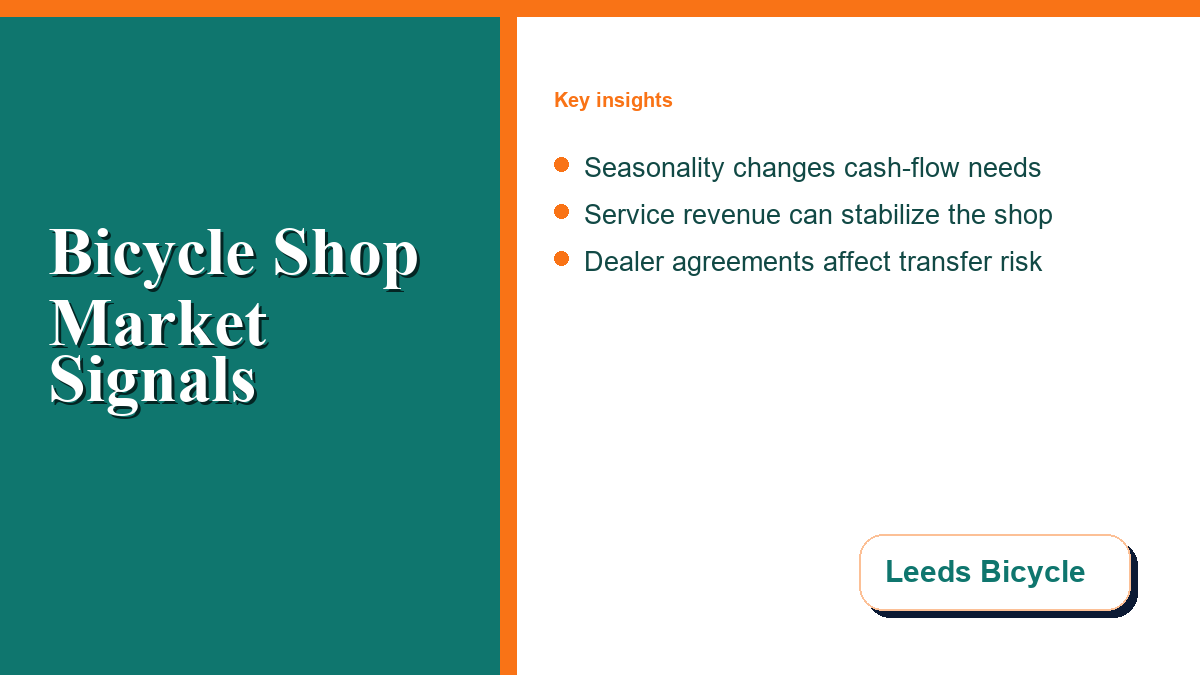
One of the most significant market signals for any bicycle shop is its seasonal revenue pattern. In the Midwest, bicycle sales and repairs naturally peak during the spring and summer months when weather conditions are ideal for outdoor riding. Conversely, winter months often bring a sharp decline in retail foot traffic and sales volume. A disciplined buyer should closely analyze the shop’s monthly financial statements to see how the current owner manages this seasonality. A healthy business will usually show a clear strategy for weathering the slower months, such as winter service specials, indoor training equipment sales, or fat bike promotions. Furthermore, the buyer should verify that the shop maintains sufficient cash reserves from the peak summer months to cover fixed overhead costs during the winter drop-off.
To mitigate the risks of seasonal retail sales, service and maintenance revenue should be a major focus of the evaluation. While bicycle sales generate high top-line revenue, the profit margins on new bikes are often thin. In contrast, the service department can produce steadier, higher-margin work. When reviewing how a shop presents its history and mission, including public pages such as an about page, look for indicators of a strong service-first culture. A shop with a reputation for reliable repairs, custom builds, and routine maintenance is often more resilient to seasonal fluctuations than one that relies solely on new inventory sales.
Assessing Inventory Quality and Supplier Relationships
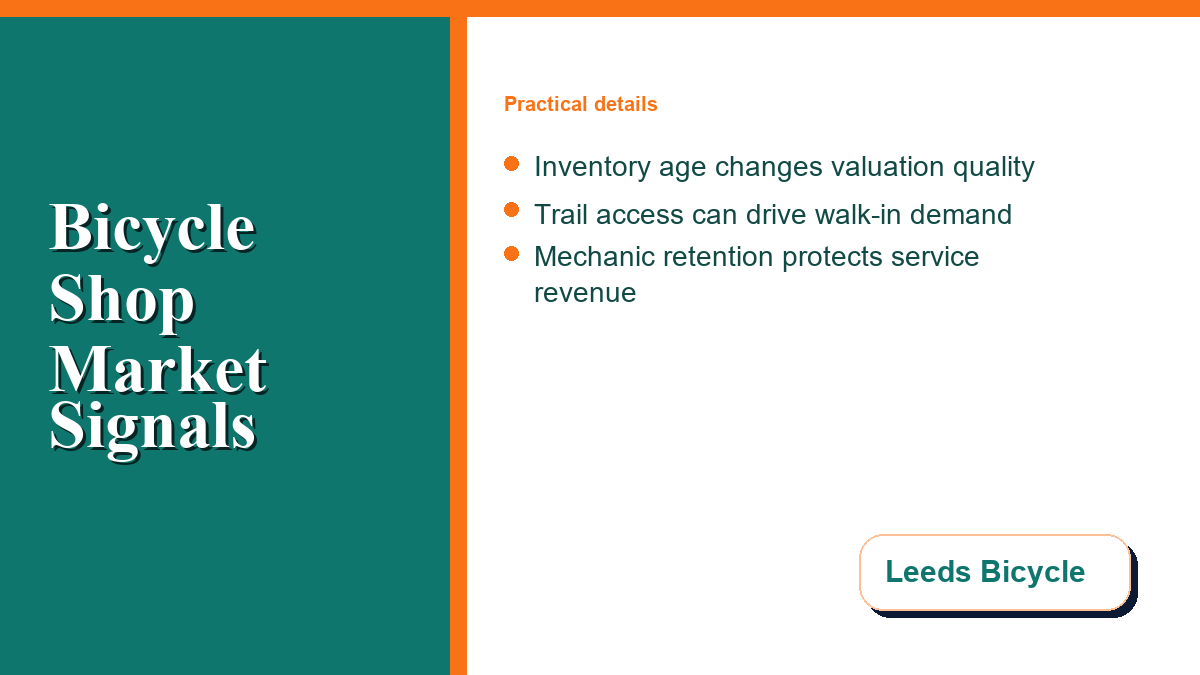
Inventory is often the largest asset on a bicycle shop’s balance sheet, and it is a critical area where buyers make costly mistakes. You need to determine whether the inventory is current and salable or if it consists of obsolete parts and outdated bicycle models. Outdated inventory should be discounted in your valuation, as it may sit on shelves or require price cuts to liquidate. Additionally, evaluate the shop’s relationships with major bicycle brands. Many top-tier brands restrict dealership territories, meaning a shop’s value is heavily tied to its exclusive rights to sell certain brands in its local area. You should confirm that these dealer agreements are transferable to a new owner, as losing a key brand can damage the shop’s competitive position.
Understanding how the business fits into the local competitive landscape is another key signal. While scanning regional market outlooks compiled by firms like Midwest Business Brokers, a prospective bicycle shop buyer must pay close attention to trail access, local cycling infrastructure, and competing stores. A location near a popular greenway or multi-use trail system can drive substantial walk-in traffic for tube replacements, adjustments, and accessories. On the other hand, a shop located far from cycling corridors or in a market saturated with big-box retailers will face much higher customer acquisition costs. Proximity to active riding areas is a strong predictor of recurring accessory sales and emergency repairs.
Analyzing Staff Expertise and Operational Workflows
A bicycle shop is only as good as its mechanics and staff. Unlike general retail, a specialty bike shop relies on technical expertise to build customer trust. High-quality mechanics possess certifications, specialty tool proficiencies, and years of experience that cannot be easily replaced. With the rapid rise of electric bicycles, mechanics may also need specialized electrical diagnostics training. During your transition planning, you should assess whether key staff members are willing to remain with the business under new ownership. If the mechanics leave, the shop’s service capacity and its highest-margin revenue stream may be compromised, forcing you to rebuild the service department from scratch.
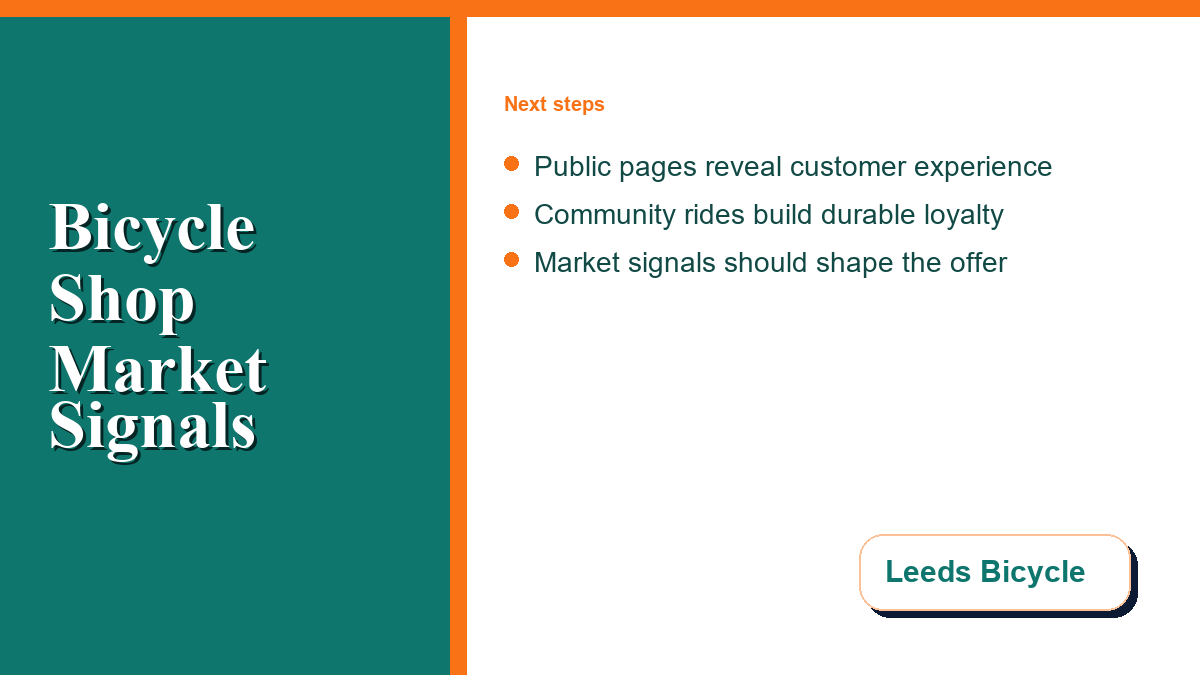
Furthermore, the workflows within the service department should be streamlined and documented. An efficient shop uses modern point-of-sale systems to track work orders, manage inventory levels, and schedule repairs. If the shop still relies on paper tickets or has no clear system for tracking service history, a buyer may need to invest time and capital to modernize operations. Public pages such as a contact page can show how easy the shop makes customer communication, but formal buyer outreach should stay organized through the sale process. Observing publicly available customer experience signals can still reveal a great deal about operational discipline.
Community Engagement and Brand Loyalty
The final local market signal to evaluate is the shop’s level of community engagement. A successful local bike shop is often a cornerstone of the regional cycling community, sponsoring local races, hosting weekly group rides, and supporting advocacy groups. This community goodwill is an intangible asset that does not show up on a balance sheet but is critical for long-term customer retention. A shop that is actively involved in the local scene enjoys a level of brand loyalty that online retailers and large chains cannot easily replicate. Evaluating online reviews, social media engagement, and participation in local cycling advocacy will help you gauge the strength of this customer bond.
By carefully reading these local market signals, including seasonality, service revenue ratios, inventory quality, location, staff expertise, and community engagement, you can make a more informed and realistic offer on a bicycle shop. Discretion and analytical rigor during the pre-offer phase protect your capital and set the stage for long-term success. A structured approach to business acquisition helps ensure that your passion for cycling is supported by a stable commercial enterprise, allowing the shop to continue serving local riders for years to come.